Make Bad Art
I Give You Permission

As an elder millennial and former “gifted and talented child” of the 80s and 90s, for the first 30 or so years of my life, I believed spending time doing things at which I didn’t excel was a waste of time. For example, I loved to draw and paint, but after a 7th grade art teacher told me I should stick to writing, I listened. The “gifted” label played a part in the development of extremely high expectations of myself. (They persist to this day, I’m working on it…) I do not recommend being a perfectionist. Seriously, 0 out of 5 stars.
In my early 30s, as a work at home mom of two young children, I felt like I was drowning. A friend gave me a piece of advice: spend time on a hobby that will have an end result and give a sense of accomplishment. She enjoyed knitting as a hobby, and said completing a knitting project provided a sense of satisfaction and accomplishment which the day in and day out of raising children doesn’t provide.
Side note: If you’ve never been a primary full time caretaker of young children, the downside is that for many of us, at times it can feel… never ending. Repetitive and monotonous. You do all the same things day after day and rarely feel any sense of accomplishment, because the work is never done.
I took her advice, in part because I also happened to read Grit: The Power of Passion and Perseverance by Dr. Angela Duckworth around that time.
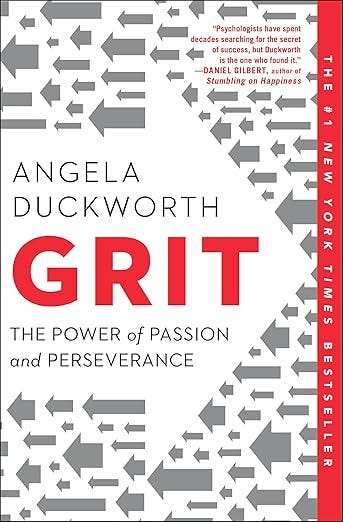
If you haven’t read it, Duckworth explains that grit = passion + perseverance, and grit trumps “talent” and high IQ the majority of the time, according to many research studies. In other words, even if you’re not naturally good or “talented” at an activity, if you’re passionate about it and persevere, you can usually BECOME good at it. Better at it, even, than many folks with a “natural talent.” Grit is a much more accurate measure of success in most or all settings than talent, including settings such as attending West Point all the way to acting in Hollywood or making it to the Olympics.
No joke, the research in this book was a life changer for me. (I’m also so glad I read it when my kids were little so I could apply to my parenting from there on out.) Being smart and/or creative is just a character trait, kind of like being funny. Being a good writer didn’t mean I would make a living as a writer, just like being funny doesn’t mean you’ll succeed with stand up comedy—not without putting in the work.
I didn’t expect to pick up a new skill and make a living at it, but it was reassuring to know that if I put the time in, I could potentially excel at it, if I really wanted to. It gave me the courage to try scary new things, even if I wasn’t already or naturally “good” at them.
My new hobbies included activities like drawing and painting, which was something I enjoyed but didn’t believe I was “good” at, as well as activities like learning to play guitar, something I had always wanted to do. Oh, and cake decorating! And hand lettering, and bullet journaling, and ukulele… and maybe other things I’m forgetting.
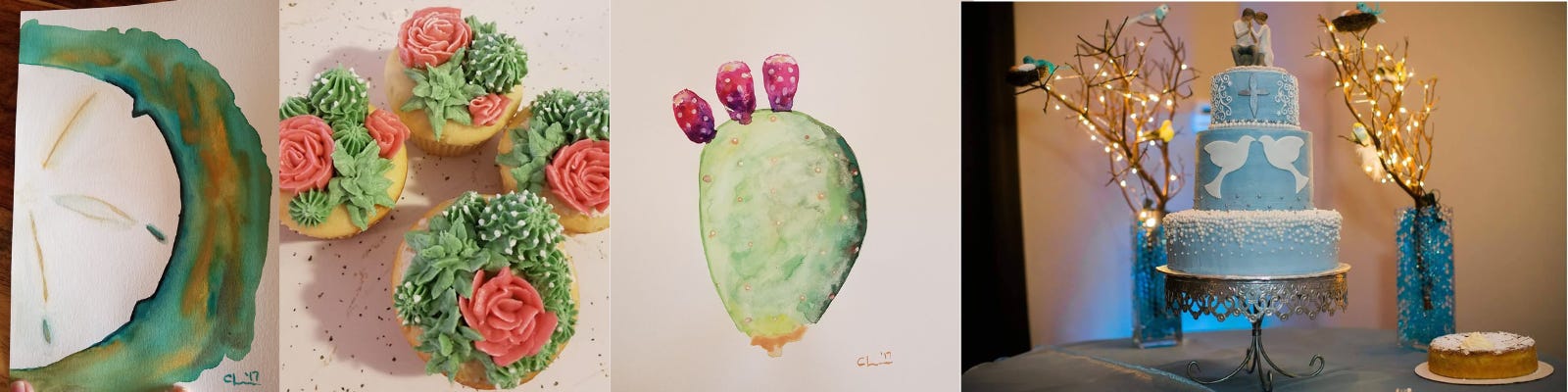
Was I good at any of it right off the bat? Of course not. It was all brand new. But I gave myself permission to do it anyway, for the JOY of it. And for the aforementioned sense of accomplishment: finishing a painting, or learning the cords of a new song, was so satisfying. It really did help balance out that stage of my life. It made me calmer and happier. And it made me a better mom, alongside psych meds, therapy, and yoga.
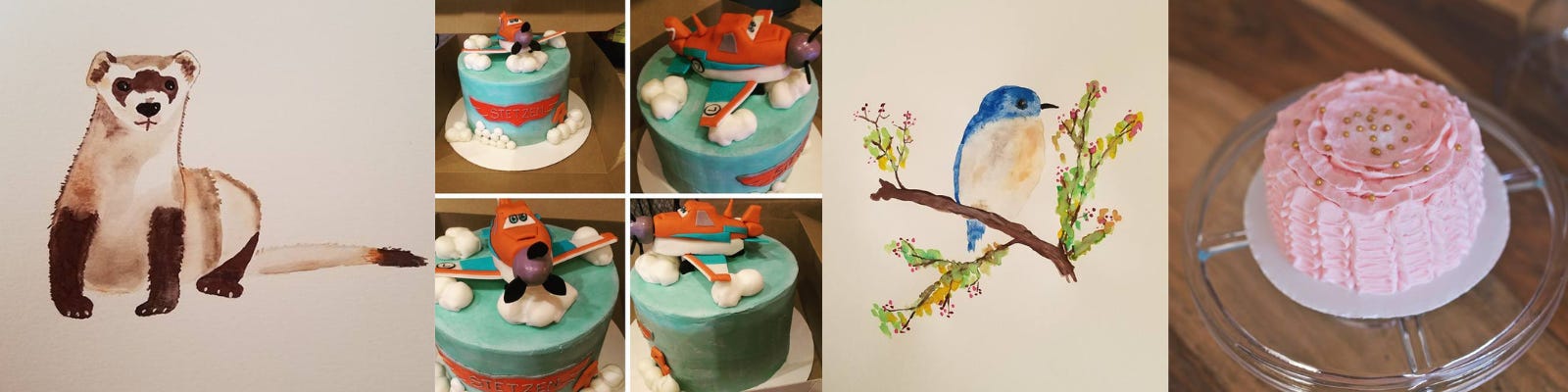
Repeat after me: it’s perfectly fine to do something JUST BECAUSE YOU ENJOY IT. You don’t have to be good at it, nor do you have to monetize it. If you love making art but you’re not very good at it: MAKE BAD ART. If you love running but you’re slow, run anyway. Do a 5k and come in last place—if doing it makes you happy.
I ended up being pretty good at cake decorating, and I did monetize that hobby for a little while (because starting a family right at the collapse of the economy in 2008/2009 was… rough). I’m still only barely passable at guitar and ukulele, and I don’t care; making music is meditative and healing for me. And after I switched mediums to learn how to do digital art in the last couple years, I’m finally good enough at it that I feel comfortable putting a tiny bit of my art into my next Kickstarter, like these little sticker designs.

And eventually, in the couple months after I turned 40 in 2022, I wrote a book. Even though I studied creative writing (alongside psychology) for my BA, I honestly ever expected to write a novel. I was a poet and an occasional short story writer. But I was also a bookworm who read novels constantly, and I think the reason I never set my sights on writing one was because if I was going to do that… It had to be PERFECT. The academic side of creative writing can be pretty classist and snobby (sorry not sorry). As an extension, the same can be said for the traditional publishing industry. In my head, if I wasn’t going to write the next Great American Novel, what was the point?? And I didn’t think I could do that, so I didn’t even try.
But by 40, I had learned everything I explained here. I knew it was about the joy of creating and it didn’t have to be perfect. I didn’t have to write a best-selling, award-winning book. I could just write a story I’d like to read. So I did. And then I wrote another, and another. I slowly developed a readership and after self-publishing eight books, I signed with my indie publisher. I’d like to make a living at this, and I’m not there yet, BUT I also already consider myself to be a successful author, many times over.
Why? Because I wrote an entire BOOK, and then another, and another. I was brave and vulnerable enough to share them with the world. They have brought many readers joy. I’ve been told I’m an auto-buy author and someone’s favorite author. One of my books was in a reader’s top three books of the year in 2024. Several readers have told me my trilogy is their favorite romantasy series. In my first full year as an author, I sold around 100 books. In my second year, 1138. And in my third year, I doubled year two, with a total of 2362.
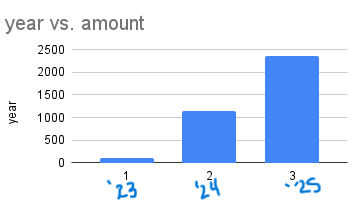
Those numbers are tiny compared to many successful indies, but you know what I see in that chart? I see progress. I see a possibility of financial success if I can build enough of a backlist, so that’s what I’m doing.
Thus, even if I never end up making a good living at this, yes, I consider myself successful. Very. And I’m so, so grateful to myself for allowing myself to MAKE “BAD” ART.
What life lesson did you learn as an adult that you wish everyone could learn? Drop it in the comments; let’s help each other grow. 🫶🏻
Bad art is the only kind I know.
I love this!